

Who Does The Government Owe Money To
Readers Question: Who exactly is the UK is in Debt to? Please can you simplify and explain?
There are two types of debt:
- Government debt (Public sector debt / National debt) – The money the government has borrowed, primarily from the private sector.
- External debt. Liabilities the UK owe to the rest of the world – this is both private sector and public sector.
Who does the government borrow from?
The UK government borrows mainly from
- UK pension funds/insurance companies (29%)
- Private corporations / other financial institutions
- UK building societies. (e.g. building societies buy government gilts to invest their savings to get a decent return.)
- UK Banks
- UK Private investors
- Foreign investors (foreign banks and foreign investment firms (2018 approx 20%)
- Bank of England Asset Purchase facility (Quantitative easing)

Change in debt composition 2003-2018

This shows overseas investors hold approx 20% of UK gilts.
Example
- A pension fund will be interested in purchasing UK government gilts to gain a secure return on long-term investment.
- A charity/firm with excess savings may purchase government gilts to get a good interest rate while it decides how to use the money. Retained profit from UK companies has increased in recent years, and corporations have become a bigger buyer of UK gilts.
- A private individual may purchase gilts as part of a balanced portfolio of investment.
We owe money to ourselves
One feature of UK government borrowing is that 75% of the debt we are borrowing from UK citizens and UK institutions. It is like a transfer of pension funds to the government.
Foreign holdings of UK Debt
How much does the government owe to foreign nationals?

UK Debt held by overseas investors (source: DMO)
Foreign holdings of UK debt can be seen at DMO – Gilt Market Data – Oversees holdings
In Q3 2015, 25.9% of UK debt was held by foreign investors. This is lower than the mid-2008 peak of 35% but also higher than previous decades.

The UK has a high percentage of long-term maturity gilts. This means that the government is not liable to repay the gilt for a longer period. This means it doesn't have to reimburse gilt owners and resell gilts as frequently.

2. UK External Debt
Firstly, this is very different to government (national) debt. It is the total amount that people in a country owe to the rest of the world. It includes both government debt and private sector debt.
In the UK, external debt is currently over 430% of GDP (£6,200bn)
The vast majority of this is liabilities by the banking and finance sector. UK banks external liabilities amount to over £4,000bn.
However, it should be noted that this size of external liabilities is matched by UK external assets of £6,000bn.
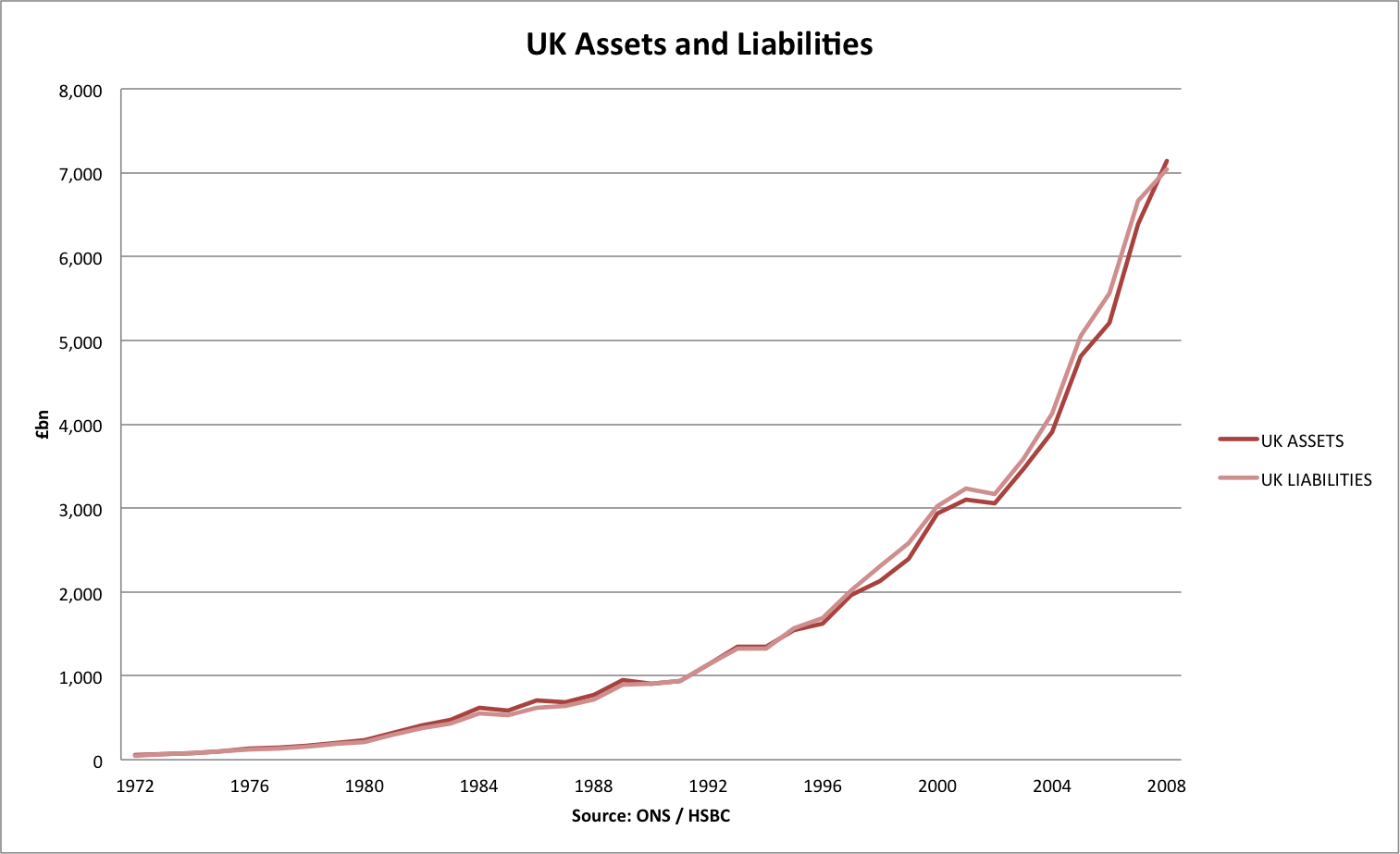
See: UK External debts and assets
3. Private Sector Debt
As well as government debt, we have private sector debt (households, business, finance sector). Total UK debt.
- Most household debt/business debt will be owed to UK banks and building societies
Related
- Total UK Debt
- UK government spending
- Should we worry about UK national debt?
Video on UK Debt
Who Does The Government Owe Money To
Source: https://www.economicshelp.org/blog/4098/economics/who-does-the-uk-owe-money-to/
Posted by: hawkinsyoullifeire.blogspot.com
0 Response to "Who Does The Government Owe Money To"
Post a Comment