

How Did The Black Death Change The Genetic Makeup Of Modern European Populations
Black Death Likely Contradistinct European Genes
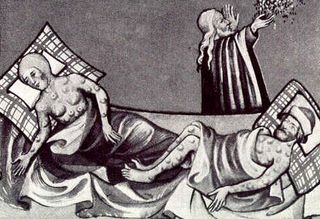
The Black Expiry of the 14th century may be written into the DNA of survivors' descendants, new enquiry finds.
The written report reveals that Roma people (sometimes known every bit gypsies, although this is considered a derogatory term) and white Europeans share alterations to their genetic code that occurred subsequently the Roma settled in Europe from northwest India 1,000 years ago. The plague of the 1300s, which killed at to the lowest degree 75 one thousand thousand people, is a likely candidate for forcing this evolutionary change.
"We show that in that location are some immune receptors that are conspicuously influenced by development in Europe and not in northwest India," said study leader Mihai Netea, a researcher in experimental internal medicine at Radboud University Nijmegen Medical Center in the Netherlands.
"Bharat did not take the medieval plague, as Europe had," Netea told Live Scientific discipline. "We have also demonstrated that these receptors are recognizing Yersinia pestis, which is the plague bacterium." [In Photos: 14th-Century Black Death Graves Discovered]
Searching for similarities
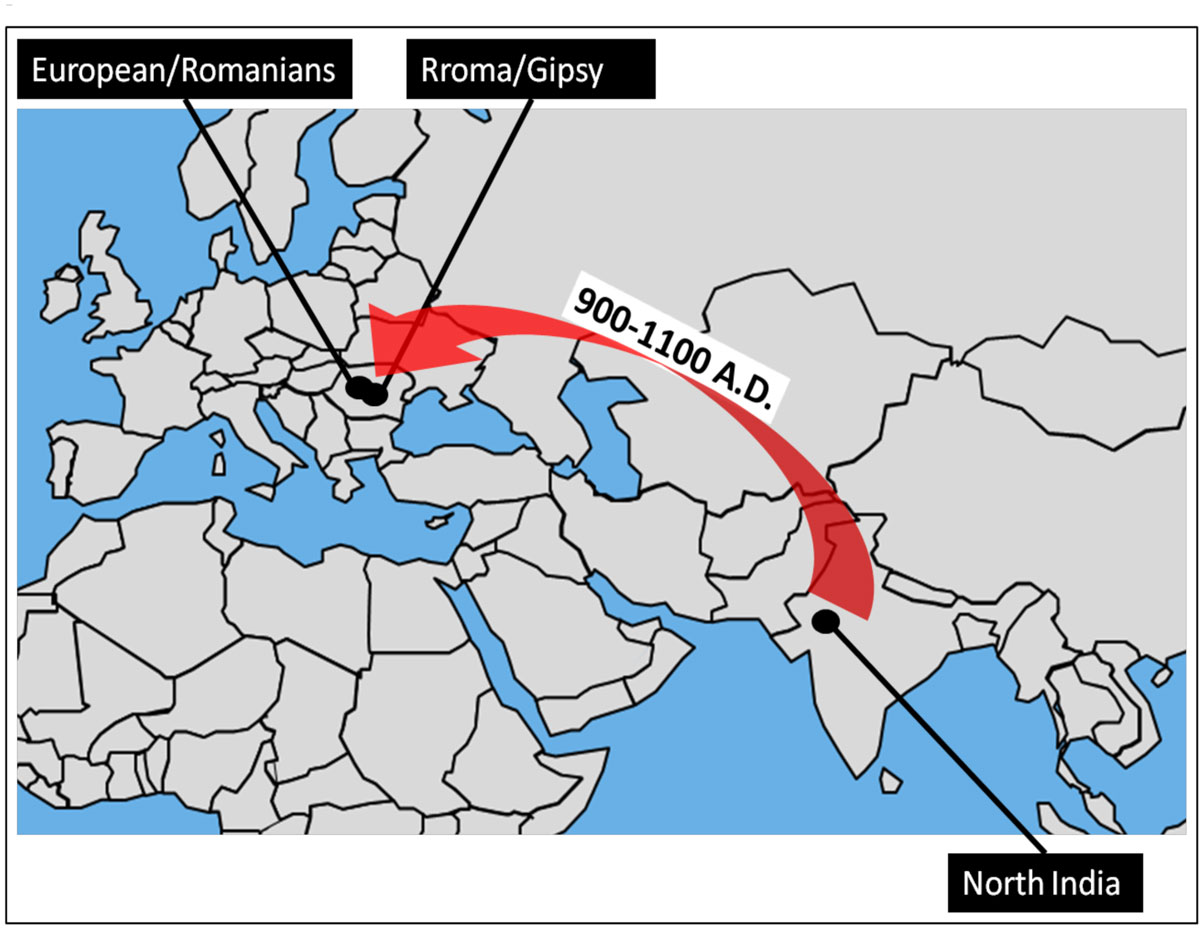
Netea and his colleagues made their discovery past scanning almost 200,000 single-nucleotide polymorphisms (SNPs), or short segments of Deoxyribonucleic acid that vary among people. They tested people from Romania, also as Roma people. For social and economic reasons, Netea said, the Roma have lived among Europeans since about A.D. k, without much interbreeding between the ii groups. That gives researchers a rare opportunity to study two genetically distinct populations in one geographical region.
The researchers looked for genetic variations that appeared in both Europeans and Roma people. And so, they took that list and crossed off the genetic variations that besides appeared in a population of northwest Indians, to rule out evolutionary modify that originated outside Europe.
The result was a list of about 20 genes that show testify of convergent evolution between Europeans and Roma — meaning the two groups started out different just evolved to await more like because of pressures in their environment.
Black Expiry genetics
The genes on the list have a multifariousness of functions. One cistron, SLC45A2, is known to be involved in skin pigmentation. Others are linked to allowed-system function.
I immune-related cluster included three altered genes, making it the most obvious candidate for closer perusal. The cluster, called TLR2, was already known to be involved in building the receptors on the surface of leukocytes, allowed cells that recognize and destroy strange invaders.
Because plague was such a widespread and devastating effect in Europe, Netea and his colleagues reasoned that the Black Expiry outbreak, which occurred after the Roma arrived, might accept put pressure on this gene cluster to evolve. To test the thought, they looked at how cells engineered to express TLR2 would hold upward against Y. pestis and Yersinia pseudotuberculosis, an ancestor of Y. pestis. They found that TLR2 caused a heightened immune response when exposed to both bacteria.
Other diseases could have altered the same genes, Netea said, but plague is a strong candidate, because it afflicted Europe and non northwest India, and considering it had such a widespread, devastating influence. The findings could have medical implications even in today'due south world, where plague is no longer such a danger. For example, autoimmune disorders, in which the body attacks its own tissues, may arise because of allowed systems programmed by epidemics to respond strongly to the threat of invasion, Netea said.
Humans "were modified, basically, by the infections," he said.
The researchers report their findings today (February. 3) in the journal Proceedings of the National University of Sciences.
Follow Stephanie Pappas on Twitter and Google+ . Follow united states @livescience , Facebook & Google+ . Original article on Alive Science.

Stephanie Pappas is a contributing writer for Live Science, covering topics ranging from geoscience to archaeology to the human brain and beliefs. She was previously a senior writer for Alive Science but is at present a freelancer based in Denver, Colorado, and regularly contributes to Scientific American and The Monitor, the monthly mag of the American Psychological Clan. Stephanie received a bachelor's degree in psychology from the University of Due south Carolina and a graduate certificate in science communication from the University of California, Santa Cruz.
Source: https://www.livescience.com/43063-black-death-roma-evolution.html
Posted by: hawkinsyoullifeire.blogspot.com
0 Response to "How Did The Black Death Change The Genetic Makeup Of Modern European Populations"
Post a Comment